AI · Research & Collaboration

Dr. RamtinMojtahedi, Ph.D.

AI Researcher · Semantic Segmentation · Foundation Models

I develop clinically grounded, reproducible machine-learning systems for medical imaging, multimodal prediction, lung-transplant outcome forecasting, tumour segmentation, and treatment-response modelling.

2D/3D segmentationVision transformersSAM & MedSAMMultimodal modellingTrustworthy validation
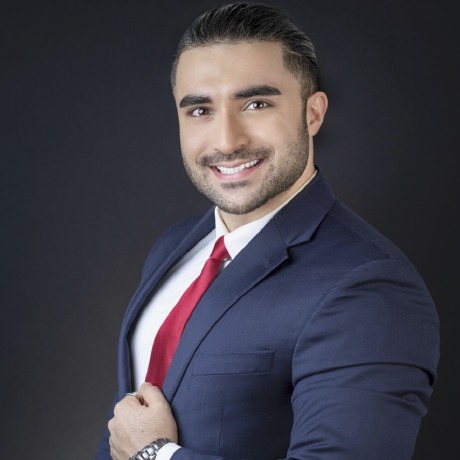
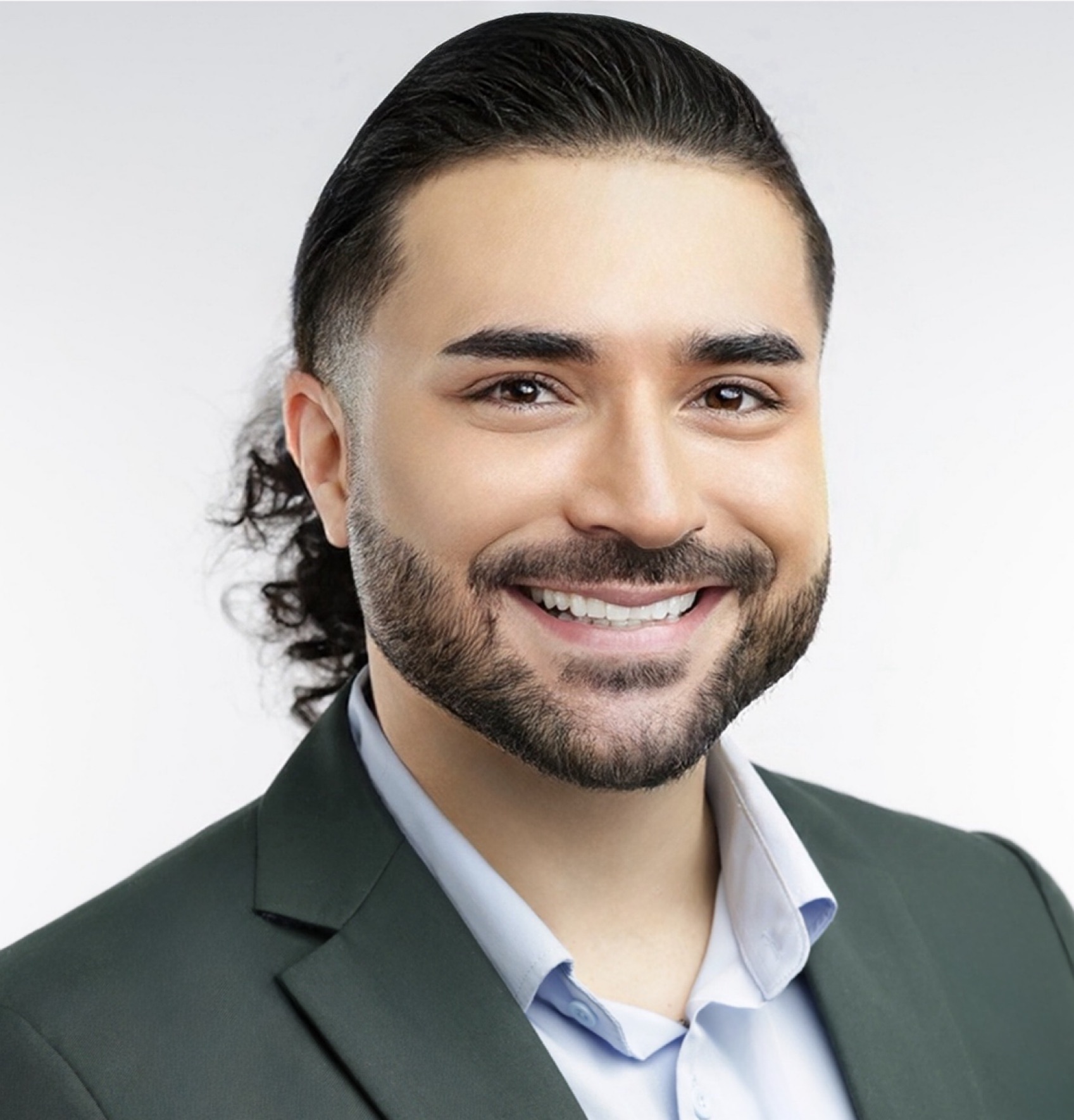
Professional portrait of Dr. Ramtin Mojtahedi
CVUpdated
June 2026
Postdoctoral ResearcherUHN · University of Toronto

Make a connection

Consultation & collaboration.

Book a consultation or collaboration meeting about medical AI, research, technical projects, or professional opportunities. Open the booking calendar to choose an available time.

Request a consultation or collaboration meeting

Times are proposals and will be confirmed by email.

Daylight saving time is calculated for the date you select.
A brief outline helps me prepare for our session.

Your details are used only to prepare an email draft and optional calendar hold in your browser.

Latest news

Research & community updates.

Latest on LinkedIn ↗
LinkedIn post · Alumni

Queen’s Homecoming and alumni mentorship

Celebrating 100 years of Homecoming at Queen's University last weekend was a reminder of the value of staying connected across generations and disciplines. My PhD years at Queen's School of Computing, within Queen's University Faculty of Arts and Science, shaped my work in AI and my commitment to teaching and mentorship. For me, alumni connections offer a practical way to contribute: sharing experience, exchanging ideas and helping students navigate their next steps. I’m always glad to connect with students and fellow alumni interested in AI, research or mentorship. Thank you to the Queen's Alumni team, organizers and volunteers for a memorable weekend. #QueensU #QueensAlumni #QueensComputing #QueensArtsAndScience #Homecoming2026

LinkedIn post · Biomedical AI

Biomedical AI and meaningful evidence

The value of AI in biomedical research depends on how well computational methods address the underlying scientific question. Attending the 2026 iBEST | Institute for Biomedical Engineering, Science and Technology Symposium, bringing together Toronto Metropolitan University and St. Michael’s Hospital at Unity Health Toronto, was an opportunity to explore research beyond my own area and consider where complementary expertise could lead to collaboration. As an AI researcher, I’m interested in translating biomedical questions into rigorous computational studies. That involves understanding the limitations of the data, defining the insight we hope to gain and designing validation around the intended application. Agreeing early on what would constitute meaningful evidence gives a collaboration a clear direction. It guides methodological choices and keeps the work connected to the scientific problem that motivated it. #ArtificialIntelligence #BiomedicalResearch #ResearchCollaboration #InterdisciplinaryResearch

Public manuscript · Medical imaging

Public manuscript for parameter-efficient SAM adaptation

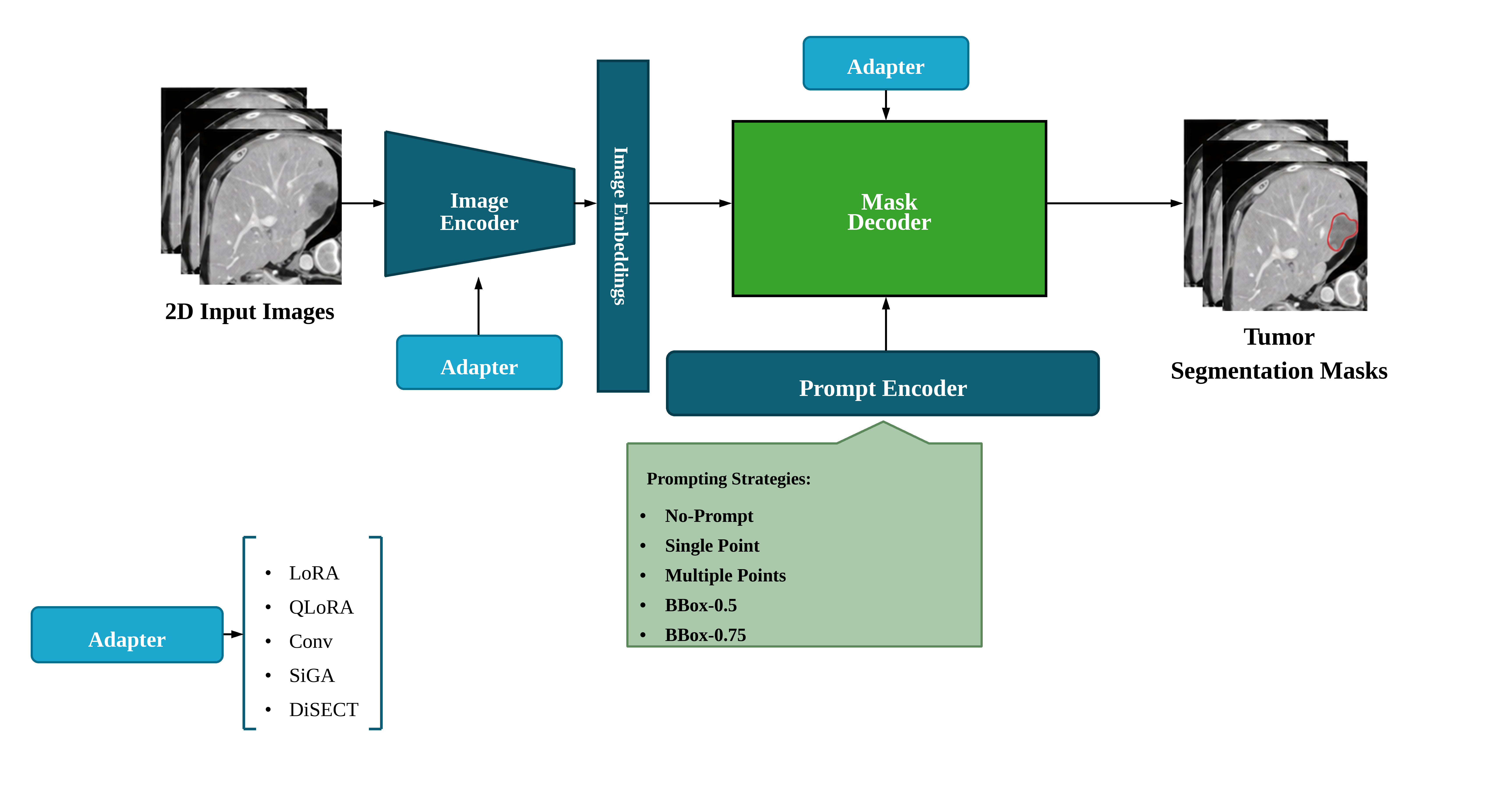
A public manuscript of our SPIE 2026 paper on parameter-efficient fine-tuning of Segment Anything for liver-tumour segmentation is now available on arXiv. It compares LoRA, QLoRA, a convolutional adapter and DiSCo across prompt settings and compute measures. This arXiv manuscript is not a separate peer-reviewed publication.

Research coverage

Our spectral-adapter research featured by PYCAD

PYCAD covered our new DiSECT and SiGA preprint, discussing spectral adaptation of Segment Anything for colorectal liver metastasis segmentation. This is research coverage, not a clinical product announcement.

Journal issueSeptember 2026 issue

Carotid radiomics study in the September issue

Our co-first-author study appears in Ultrasound in Medicine & Biology, volume 52, issue 9, pages 1890–1899. The work combines carotid plaque radiomic features with machine learning for cardiovascular risk prediction.

Publication

Multimodal risk prediction in Scientific Reports

My co-first-author study combines clinical and CT-derived imaging data for preoperative risk prediction in colorectal liver metastases. Springer Nature published the version of record on 14 October 2026.

Updated 29 October 2026 · Checked 4 November 2026

19Publications and scholarly works
9Oral and poster presentations
26Honours, awards, and distinctions
5Reviewer and service venues
900+Students taught or supported
28Leadership and volunteer roles

My expertise

Technical depth across the clinical AI workflow.

Categories and terminology are aligned with the CV updated June 2026.

CV

Computer Vision & Segmentation

2D/3D semantic segmentation; detection and classification; CNN–transformer hybrids; vision transformers; SAM/MedSAM; registration; object tracking.

DL

Data-Efficient Learning

Self-supervised and contrastive learning; few-shot learning; transfer and domain adaptation; parameter-efficient fine-tuning; adapters; active learning.

CS

Clinical & Surgical AI

Medical imaging; surgical scene understanding and video analysis as target applications; intraoperative decision support; human-in-the-loop workflows; outcome forecasting.

MM

Multimodal Modelling

Imaging–clinical fusion; longitudinal and sequence modelling; survival/time-to-event analysis; risk stratification; radiomics; treatment-response prediction.

TV

Trustworthy AI & Evaluation

Uncertainty quantification; calibration; interpretability; domain shift; confounder and shortcut analysis; fairness; external validation; clinical metrics.

MF

Models & Frameworks

PyTorch; MONAI; TensorFlow; JAX; scikit-learn; Hugging Face; XGBoost/LightGBM; CNNs; transformers; GNNs; probabilistic and vision-language models.

PD

Programming & Data

Python; C/C++; Julia; R; SQL; Bash; DICOM/PACS; EHR and claims; HL7 FHIR; SNOMED-CT; ICD-10; PostgreSQL; MongoDB; Arrow/Parquet.

RC

Reproducibility & Compute

Git; DVC; MLflow; W&B; TensorBoard; Docker/Singularity; CI/CD; CUDA; mixed precision; distributed training; Slurm; MPI; HPC.

Professional profile

Research designed for clinical relevance.

AI researcher with a Ph.D. in Computing conferred by Queen’s University in 2026 and expertise in medical image segmentation, vision transformers, foundation models, self-supervised and few-shot learning, multimodal modelling, and clinically grounded validation. Current work at Toronto General Hospital, University Health Network, and the University of Toronto focuses on multimodal forecasting of lung-transplant outcomes.

Publication identity: current work appears as Ramtin Mojtahedi; earlier engineering papers also appear as Ramtin Mojtahedi Saffari and R. M. Saffari. See the sourced biography and name record →

01Clinical question
02Data and modelling
03Robust validation
04Translation

Experience & education

A multidisciplinary research trajectory.

Research and work experience

Postdoctoral Researcher / Scientific Researcher

Toronto General Hospital, University Health Network / University of Toronto · Toronto

Jan. 2026–Present
  • Develop multimodal models for lung-transplantation outcome forecasting using clinical, imaging, longitudinal, and transplant-related data.
  • Build reproducible pipelines for risk stratification, survival analysis, uncertainty, calibration, interpretable prediction, and generalization assessment.
  • Collaborate with thoracic surgery, lung transplantation, and clinical research teams.

Ph.D. Research Assistant

Queen’s University — Vector Institute Affiliate · Kingston

2021–2025
  • Developed CNN–transformer, vision-transformer, self-supervised, contrastive, few-shot, and adapter-based SAM/MedSAM pipelines for liver and abdominal tumour CT.
  • Built reproducible training and evaluation pipelines and assessed generalization, uncertainty, calibration, and external validation.

Research Assistant

Iran University of Science and Technology · Tehran

Earlier
  • EEG/LFP cross-frequency coupling, wavelet-based image encryption, FPGA human tracking, carrier-phase tracking, IoT, battery, and electromagnetic prototypes.

Research Assistant

Royan Institute · Tehran

Earlier
  • Designed a high-frequency electromagnetic-wave propagator and supported cultured-cell experiments.

Research Assistant

Institute for Research in Fundamental Sciences (IPM) · Tehran

Earlier
  • Developed an LFP assessment GUI, collected EEG signals, and designed a neural-network model for concentration assessment.

Research Assistant

Iranian National Aerospace · Iran

Earlier
  • Designed a climate monitoring and tracking system, PCB, and integrated circuit.

Machine Learning and Sensor Data Analyst

Frasanjesh Fzar Iran · Pardis

Earlier
  • Applied machine learning to water- and gas-pipeline metering and sensor-data accuracy improvement.

Education

Doctor of Philosophy (Ph.D.) in Computing

Queen’s University · Kingston, Canada

Conferred 2026
  • Data-efficient deep, hybrid, transformer, and foundation-model approaches for liver and abdominal cancer tumour segmentation and classification in CT.
  • GPA: A+ (4.3/4.3; highest grades across Ph.D. coursework).

Master of Science in Engineering

Iran University of Science and Technology · Tehran

M.Sc.
  • Electrical Engineering; GPA 3.9/4.0; ranked 2nd.
  • Thesis: Brain Connectivity and Neural Cross-Frequency Coupling Analysis Using ECoG and EEG Signals.

Bachelor of Science in Engineering

Iran University of Science and Technology · Tehran

B.Sc.
  • Electrical Engineering; major GPA 3.9/4.0; ranked 1st.
  • Thesis: FPGA-Based Implementation of a Novel Human Tracking System Using a Particle Filter.

Selected research contributions

  • Foundation-model segmentation: parameter-efficient SAM/MedSAM and multiscale transformer adaptation.
  • Representation learning: self-supervised and contrastive learning for segmentation and tumour classification.
  • Architecture studies: CNN–transformer hybrids, dilated convolutions, multiscale features, and patch-resolution optimization.
  • Multimodal clinical prediction: imaging, radiomics, and clinical variables for response and outcome forecasting.
  • Translational evaluation: reproducibility, uncertainty, calibration, external validation, and clinical interpretation.

Research output

Peer-reviewed publications and scholarly work.

17 peer-reviewed, accepted, or in-press works spanning medical imaging, clinical prediction, segmentation, and biomedical engineering. Plus 1 public preprint, listed separately from the peer-reviewed count. Browse all publication records →

2026
Preprint · arXiv · Not peer reviewed

Spectral Adapters for Segment Anything Model-based Segmentation of Colorectal Liver Metastases in Computed Tomography

R. Mojtahedi, M. Hamghalam, J. J. Peoples, N. Gangai, M. Gonen, Y. S. Chun, H. C. Kang, R. K. G. Do, and A. L. Simpson

arXiv:2609.11703 [cs.CV] (2026). Version 1, submitted 10 September 2026.

Public preprint; not peer reviewed. 13 pages, 1 figure, 4 tables.

2026
Online ahead of print · Open access

Improving Preoperative Risk Stratification in Colorectal Liver Metastases: A Multi-Institutional Evaluation of Multimodal Prediction Models

K. S. M. Kobayashi*, R. Mojtahedi*, E. C. Bunker, J. F. Chou, M. I. D’Angelica, N. Gangai, M. Gönen, M. Hamghalam, A. Jain, H. C. Kang, E. Kwak, J. J. Peoples, A. H. Robins, K. L. Scott, R. K. G. Do, Y. S. Chun, and A. L. Simpson

Scientific Reports (2026). Published 14 July 2026.

Nature currently provides an unedited early-access version; volume and article number have not yet been assigned.

2026
In press · Corrected proof

Radiomic Carotid Plaque Features Integrated into Machine Learning Models for Cardiovascular Risk Prediction

R. Hu*, R. Mojtahedi*, E. Duli, M.-F. Hétu, L. Mantella, A. L. Simpson, M. J. Blaha, T. Barwell, K. Liblik, J. S. Suri, and A. M. Johri

Ultrasound in Medicine & Biology. Corrected proof online 12 June 2026. *Co-first authors.

Issue, volume, and page range have not yet been assigned by the journal.

2026
Published

Parameter-Efficient Fine-Tuning of Foundation Models for Liver Tumor Segmentation in CT

R. Mojtahedi, M. Hamghalam, J. J. Peoples, R. K. G. Do, and A. L. Simpson

Medical Imaging 2026: Computer-Aided Diagnosis, Proc. SPIE 13926, 1392612.

2026
Published · Free manuscript

Self-Supervised Transformer-Based Pipeline for Liver Tumor Segmentation and Type Classification

R. Mojtahedi, M. Hamghalam, J. J. Peoples, W. R. Jarnagin, R. K. G. Do, and A. L. Simpson

JCO Clinical Cancer Informatics 10 (2026), e2500135.

The public PMC copy is the NIH author manuscript; no Creative Commons licence is asserted here.

2026
Published · Open access

Radiomic Signatures from Baseline CT Predict Chemotherapy Response in Unresectable Colorectal Liver Metastases

M. Piliposyan, J. J. Peoples, M. Hamghalam, R. Mojtahedi, K. S. M. Kobayashi, E. C. Bunker, N. Gangai, H. C. Kang, Y. S. Chun, C. Muise, R. K. G. Do, and A. L. Simpson

Journal of Medical Imaging 13(1) (2026), 014505.

The publisher article is currently open under CC BY 4.0. The assigned PubMed Central record is not yet publicly released and is therefore not linked as available full text.

2025
Published

The Search for CT Imaging Subtypes of Colorectal Liver Metastases and the Impacts of Slice Thickness

K. S. Kobayashi, D. A. Ali, R. Mojtahedi, J. J. Peoples, M. Hamghalam, N. Gangai, M. Gönen, R. K. G. Do, Y. S. Chun, H. C. Kang, and A. L. Simpson

Medical Imaging 2025: Computer-Aided Diagnosis, Proc. SPIE 13407, 134071I.

2025
Published

Predicting Response to Therapy in Pancreatic Ductal Adenocarcinoma Using Convolutional Neural Networks

J. Zhou, D. Ali, R. Mojtahedi, A. B. Barekzai, J. Chakraborty, H. Khasawneh, C. Vilela, N. Horvat, J. Miranda, A. C. Wei, and A. L. Simpson

Medical Imaging 2025: Computer-Aided Diagnosis, Proc. SPIE 13407, 134071C.

2025
Published

Performance Evaluation of a Stacked Classifier for Predicting Treatment Response in Unresectable Colorectal Liver Metastases

M. Piliposyan, M. Hamghalam, R. Mojtahedi, J. J. Peoples, K. S. Kobayashi, E. C. Bunker, N. Gangai, Y. S. Chun, R. K. G. Do, C. Muise, and A. L. Simpson

Medical Imaging 2025: Computer-Aided Diagnosis, Proc. SPIE 13407, 134071P.

2025
Published

Parameter-Efficient Fine-Tuning and Few-Shot Learning of Multiscale Vision Transformers for Liver Tumour Segmentation in CT

R. Mojtahedi, M. Hamghalam, J. J. Peoples, W. R. Jarnagin, R. K. G. Do, and A. L. Simpson

Medical Imaging 2025: Computer-Aided Diagnosis, Proc. SPIE 13407, 1340738.

2025
Published

Leveraging Persistent Homology for Liver Tumour Classification

D. A. Ali, J. J. Peoples, R. Mojtahedi, K. S. Kobayashi, W. R. Jarnagin, R. K. G. Do, and A. L. Simpson

Medical Imaging 2025: Computer-Aided Diagnosis, Proc. SPIE 13407, 134071Q.

2024
Conference presentation · Record pending

Dilated Convolutional Transformer-Based Segmentation for Primary and Secondary Liver Cancers Tumour: A Comparative Study

R. Mojtahedi, M. Hamghalam, W. R. Jarnagin, R. K. G. Do, and A. L. Simpson

IMNO 2024 Conference, Mississauga, Canada (2024).

No DOI or archival proceedings record was located. Listed as a conference presentation, not as a verified peer-reviewed paper.

2023
Published

Multi-modal Brain Tumour Segmentation Using Transformer with Optimal Patch Size

R. Mojtahedi, M. Hamghalam, and A. L. Simpson

Brainlesion: Glioma, Multiple Sclerosis, Stroke and Traumatic Brain Injuries, Lecture Notes in Computer Science 13769, pp. 195–204 (2023). BrainLes 2022; first online 18 July 2023.

The linked repository is currently a bibliographic record; it should not be interpreted as a complete code release.

2023
Published

Leveraging Contrastive Learning with SimSiam for the Classification of Primary and Secondary Liver Cancers

R. Mojtahedi, M. Hamghalam, W. R. Jarnagin, R. K. G. Do, and A. L. Simpson

Medical Image Computing and Computer Assisted Intervention – MICCAI 2023 Workshops, Lecture Notes in Computer Science 14394, pp. 311–321 (2023). First online 3 February 2024.

Conference year is 2023; the Springer chapter was first published online in 2024.

2022
Published · Preprint available

Towards Optimal Patch Size in Vision Transformers for Tumor Segmentation

R. Mojtahedi, M. Hamghalam, R. K. G. Do, and A. L. Simpson

Multiscale Multimodal Medical Imaging, Lecture Notes in Computer Science 13594, pp. 110–120 (2022).

2017
Published

An Innovative Smart Package for Liquid Flow Meters

R. M. Saffari and S. Mirzakuchaki

2017 Iranian Conference on Electrical Engineering (ICEE), pp. 158–163.

2016
Published

A Novel Image Encryption Algorithm Based on Discrete Wavelet Transform Using Two-Dimensional Logistic Map

R. M. Saffari and S. Mirzakuchaki

2016 24th Iranian Conference on Electrical Engineering (ICEE), pp. 1785–1790.

2016
Published

A Novel FPGA Design of a High Dynamic Human Tracking System Using Particle Filter

R. M. Saffari and S. Mirzakuchaki

2016 24th Iranian Conference on Electrical Engineering (ICEE), pp. 1043–1048.

2015
Conference paper · Metadata limited

On Design of Carrier Synchronization System Using Bayesian Filtering Framework

M. Ayat, R. M. Saffari, and S. Mirzakuchaki

7th Iranian Conference on Electrical and Electronics Engineering, Gonabad, Iran, 19–20 August 2015.

No DOI, page range, or archival publisher landing page was verified. An author-uploaded copy exists elsewhere, but its redistribution rights were not assumed.

Conference contributions

Five oral and four poster presentations.

Research communicated across medical imaging, oncology, neuroscience, and biomedical engineering venues.

Oral · 2024

Tumour Segmentation in Colorectal Liver Metastasis Using an Optimal Vision Transformer Patch Resolution

IMNO2024, Mississauga.

Oral · 2023

Leveraging Contrastive Learning with SimSiam for the Classification of Primary and Secondary Liver Cancers

MICCAI, Vancouver.

Oral · 2022

Tumour Segmentation in Colorectal Liver Metastasis Using an Optimal Vision Transformer Patch Resolution

MICCAI, Singapore.

Oral · 2017

Application of Cross-Frequency Coupling Measures

Young Iranian Researchers.

Oral · 2014

Real-Time Human Tracking System

Iran University of Science and Technology.

Poster · 2025

Parameter-Efficient Adapter Tuning of MedSAM for Abdominal CT Liver Tumour Segmentation

Queen’s University.

Poster · 2017

Frequency-Frequency Cross-Frequency Coupling in Neuroscience

ISCELEC.

Poster · 2017

Assessment of the Electromagnetic Field Effects on Primary Mouse Cortical Neurons

Royan Institute.

Poster · 2015

FPGA-Based Real-Time Human Tracking System

IUST ECE Department.

Honours & recognition

26 honours, awards, grants, and distinctions.

Competitive recognition for research achievement, leadership, innovation, and community contribution.

2026

UHN Canada Leads Scholar.

2026

Canada Leads 100 Challenge Funding Grant, University Health Network.

2025

Best Poster Paper Award, Sinclair Cancer Research Institute, Queen’s University.

2024–2025

First-ranked team, Queen’s School of Computing AI CREATE Challenge.

2024–2025

Peer Leadership Award, Queen’s University.

2024–2025

Shortlisted for the Ontario Graduate Scholarship.

2024–2025

Shortlisted for the Agnes Benedickson Tri-Colour Award.

2023–2024

SGS Award in Leadership, Innovation, and Community Engagement.

2023–2024

Ian A. Macleod Award, Queen’s School of Computing.

2023–2024

Neighbourhood Climate Action Champions Funding, City of Kingston.

2023–2024

Sustainable Action Fund, Queen’s University.

2023–2024

Mental Health Champion, Queen’s University.

2022–2023

SGPS International Student Leader Award.

2022–2023

Travel Award, Queen’s University.

2021–2022

SGPS International Student Scholarship Award.

2022

People’s Choice Research Award, Centre for Health Innovation Spring Symposium.

2017

Graduate Community Leadership Award, IUST IEEE Section.

Ph.D.

Ranked 1st in Ph.D. coursework, Queen’s University.

B.Sc./M.Sc.

Ranked 1st in B.Sc. and 2nd in M.Sc. programs at IUST.

2015

Iran’s National Elite Scholarship.

2014

Ranked top 0.02% in the Natural Science University Entrance Exam.

2014

Ranked 1st and 3rd, Iranian National Student CanSat Competition.

2013

IEEE Membership Award, Iran IEEE Section.

2011

Ranked 1st, Power Wireless Transferring Competition.

2011

Ranked 2nd, National Nanotechnology Competition, Sharif University of Technology.

2009

Ranked top 0.03% among 400,000 applicants in the Mathematical and Technical University Entrance Exam.

Teaching impact

More than 900 students taught or supported.

Instruction, mentorship, and academic support across computing, engineering, and technical problem-solving.

Introduction to Microprocessor

ARM and AVR processors; more than 150 undergraduate students.

IUST

Field-Programmable Gate Array

Xilinx and Altera FPGA systems; more than 170 graduate and undergraduate students.

IUST

VHDL

Assignments and tutoring for 50 students.

IUST

Electrical Circuits

Projects and assignments for 150 students.

IUST

Electronics I

Teaching and tutoring for 120 students.

IUST

Mathematical Engineering

Projects and assignments for 120 students.

IUST

Insulation and High Voltages

Projects and assignments for 40 students.

IUST

Communication Systems I

Projects and assignments for 60 students.

Sharif University of Technology

Business Decision Making

Projects and assignments for 40 students.

Sharif University of Technology

Leadership & service

Leadership, mentorship, and professional service.

28 roles spanning UHN, Queen’s University, professional service, mentorship, outreach, sustainability, and community engagement.

2026–present

Volunteer and committee contributor, UHN Postdoctoral Association.

2026–present

Social Officer, Latner research community, Toronto General Hospital/UHN.

2024–2026

Neighbourhood Climate Action Champion, City of Kingston.

2022–2025

SGPS Liaison, Ph.D. Officer, and Vice-President of University Affairs, Graduate Computing Society, Queen’s University.

2024–2025

FAS Graduate Mentor, Queen’s University.

2024–2025

ASUS Mentorship Program mentor, Queen’s University.

2024–2025

Graduate mentor, Queen’s AutoDrive.

2024–2025

Graduate mentor, Queen’s Knight Robotics.

2024–2025

Graduate mentor, QMIND, Queen’s University.

2024–2025

Volunteer, World Link Program, Queen’s University International Centre.

2024–2025

PEACH Market and AMS Food Bank volunteer, Queen’s University.

Jan. 2025

Volunteer, TEDxQueensU.

Sept. 2024

Responsible Futures Student Auditor, Queen’s University.

2024

Homecoming volunteer, Queen’s University.

2024

Science Rendezvous volunteer, City of Kingston.

2023–2024

Member, PhD-Community Initiative, Queen’s University.

2023–2024

Mentor, Kingston Girls SySTEM Mentorship Program.

2023–2024

Public Officer and community outreach volunteer, Rotaract Club of Kingston.

2023–2024

Finance Committee member, Society of Graduate and Professional Students, Queen’s University.

2023–2024

Peer Writing Assistant, Queen’s Student Academic Success Services.

2023–2024

Student committee member, panelist, and session chair, Imaging Network Ontario Symposium.

2023–2024

Judge, Frontenac, Lennox and Addington Science Fair.

2023–2024

Judge, Inquiry@Queen’s Conference.

2023–2024

Volunteer, Queen’s Proactive Minds.

2023–2024

Let’s Talk Science volunteer.

2023–2024

Volunteer, Queen’s Sexual Health Resource Centre.

2023–2024

Volunteer, Robogals Queen’s.

May 2023

Outreach and executive member, Centre for Health Innovation Symposium, Queen’s University.

Professional contact

Collaboration and professional inquiries.

For research collaboration, academic service, speaking, reviewing, technical discussion, mentorship, or other professional opportunities, email me directly or use the form.

Your message is emailed to ramtinrms@gmail.com through our email service. Sender IP and approximate city, region, and country may be included using GeoJS. IP location estimates can be inaccurate.